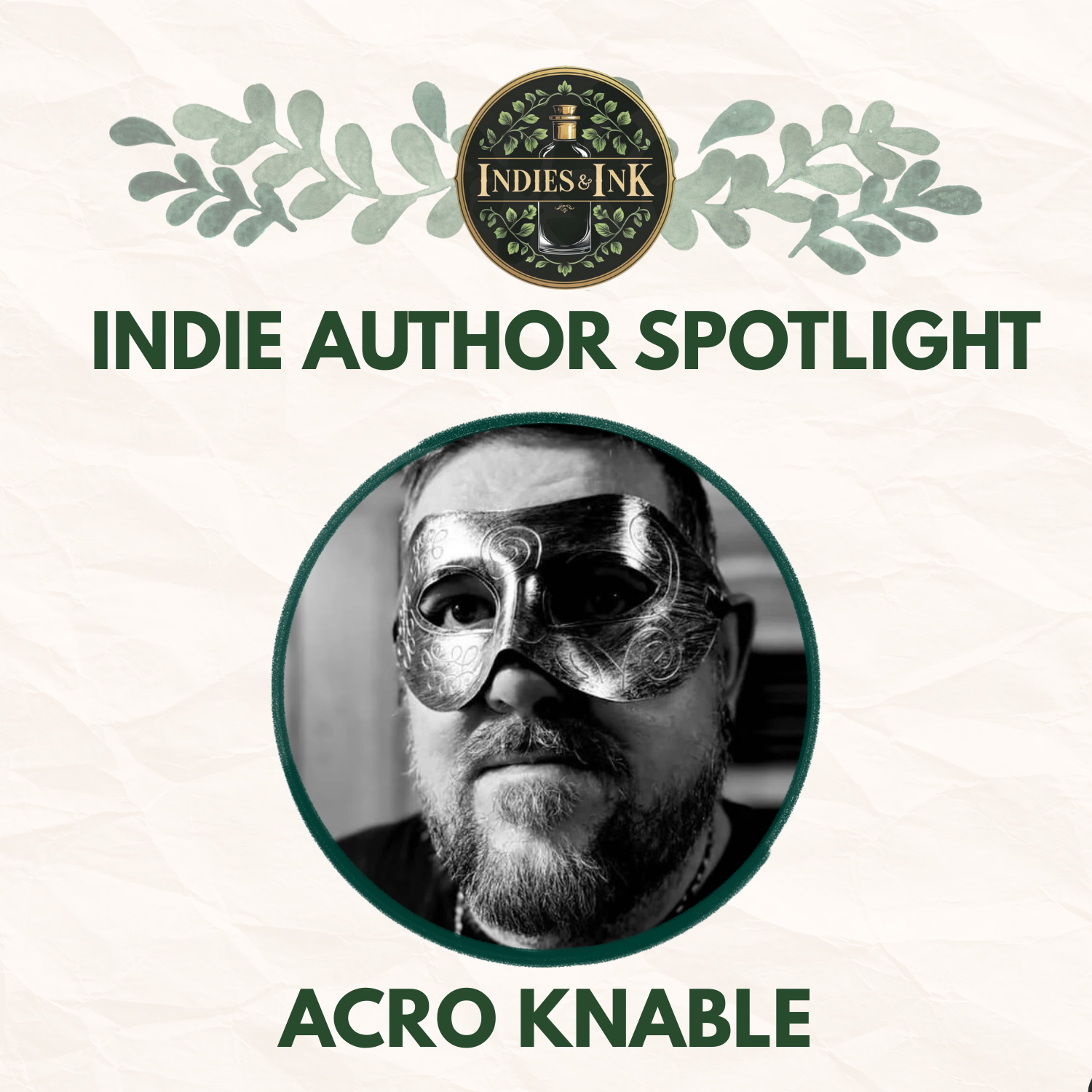
This month on Indies&Ink, we’re excited to spotlight Acro Knable, an author unafraid to embrace the darkness, Acro crafts stories where vengeance, mystery, and shadow take center stage. Who needs heroes rushing in to save the day when the darkness has its own plans?
Known for transforming fantasy into a haunting, deeply spiritual experience, Acro leaves readers breathless and constantly questioning what will happen next. With two published novels and more on the way, they are a powerful voice within the indie author community. Discover everything this talented neurodivergent author has to offer by exploring their indie author page, socials, and exclusive interview below!
Indie Author Interview:
Q: How long have you been writing or when did you start?
A:I've been writing since high school, but it was during one of the hardest periods of my life, about five years of homelessness, that writing became something deeper. I kept notebooks during that time, ideas and fragments that would eventually become The Heresy of Blood.
When I found stability, I returned to those notebooks and realised I hadn't just been journaling. I'd been building a world. That world became a nine-book dark fantasy series with companion novellas.
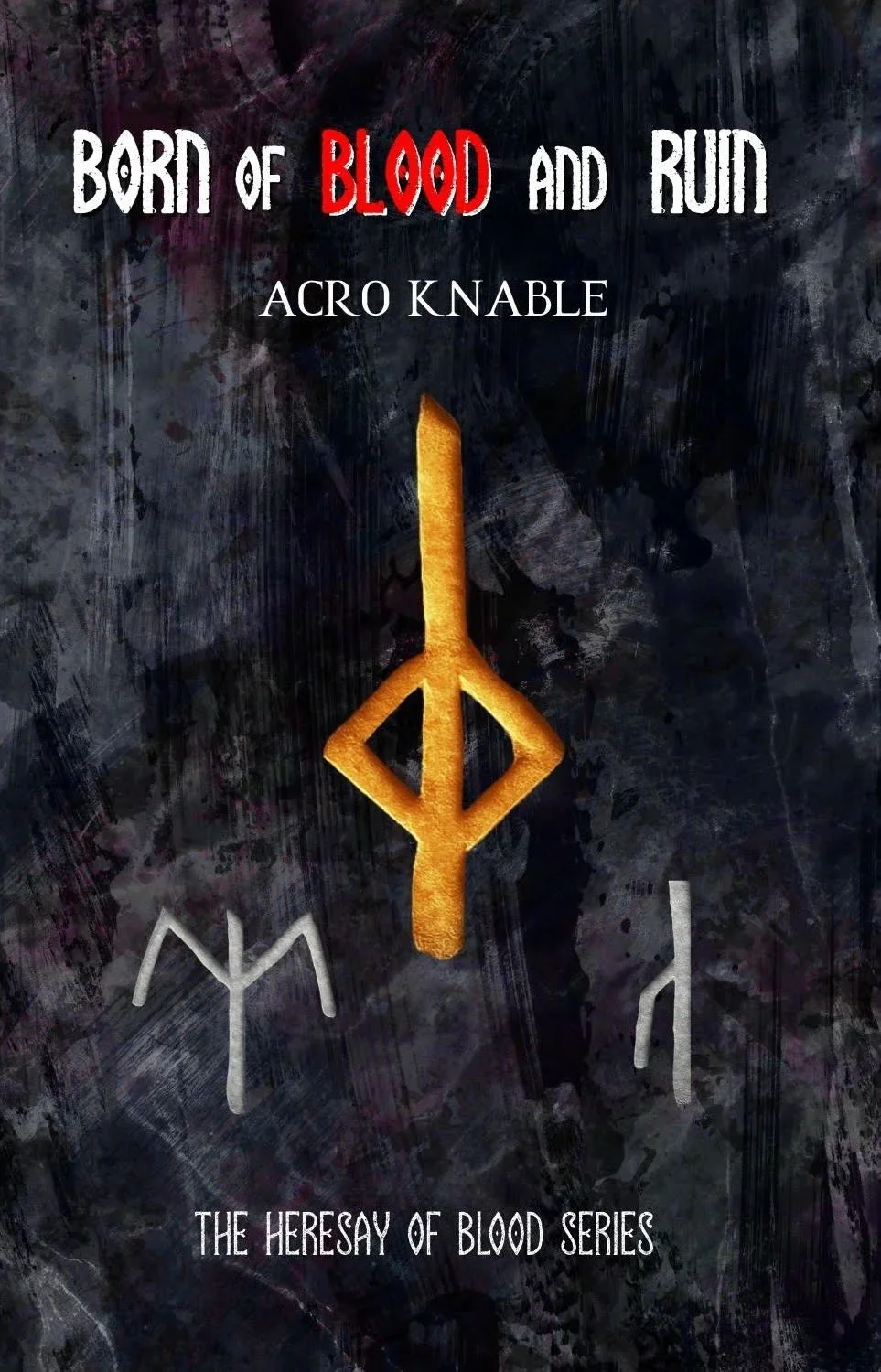
Seriously pursuing publication started about two years before Born of Blood and Ruin was released in March 2026. But the writing itself goes back much further than that.
Q: What is the most valuable piece of advice you’ve been given about writing?
A: Write what feels real to you. Don't chase trends; people will see it in your work.
That advice shaped everything about The Heresy of Blood. Dark fantasy dominated by romantasy and smutty romance gets far more algorithm traction than serious literary grimdark. I could have written something more commercially accessible. Instead, I wrote the story that needed to exist rather than the story that would sell easily.
Readers can feel the difference between a book written out of genuine necessity and one written to fit a market. I'd rather have a smaller audience who connects deeply with something real than a larger one who forgets it by next week.
Q: What advice would you give to a writer working on their first book?
A: Writing your first book is hard.
Nobody tells you how hard, and that gap between expectation and reality stops a lot of good stories from ever being finished. First, know that the difficulty is normal, and keep going anyway.
Find other authors and share your work with them. The indie author community has genuinely generous people in it who remember what the beginning felt like. Those relationships will sustain you through the harder days.
Take feedback seriously, but remember it's an opinion, not gospel. Someone else's reading of your work is valuable data, not a verdict. Develop the judgment to know which notes resonate with your own instincts and which ones would pull the book away from what it needs to be. That discernment takes time, but it's worth developing.
One practical craft note: cut dialogue tags like "he said" and "she said" wherever possible and replace them with action beats. It keeps the prose moving and reveals character simultaneously. It's a small change that makes an immediate difference.
And trust your gut. You're the only one who knows what this story is supposed to be.
Q: Are there any books or authors that inspired you to become a writer?
A: The Alchemist by Paulo Coelho taught me that the most profound stories are often the simplest at their core, a person following what they're meant to do despite everything working against them. That thread runs through The Heresy of Blood even in its darkest moments.
Slaughterhouse Five showed me that structure doesn't have to be conventional to be powerful. Vonnegut's willingness to tell a brutal truth sideways, through an unconventional lens, permitted me to approach darkness honestly rather than decoratively.
Jurassic Park, and Crichton generally, showed me that world-building can be rigorous and immersive without sacrificing story. The systems feel real because he thought them through completely. I carry that into every layer of The Heresy of Blood.
None of those are dark fantasy. But they shaped how I think about story, truth, and world-building more than any genre influence has.
Q: Has writing and publishing a book changed the way you see yourself?
A: Honestly? It depends on the day.
Some days, holding a physical copy of Born of Blood and Ruin feels like proof of something I couldn't have articulated during the harder years of my life.
Other days, the sales numbers are slow, the algorithm is uncooperative, and being a published author feels indistinguishable from shouting into a void.
What has genuinely changed is this: I know I can finish something. Something real and complete that exists outside of me now. Whatever happens with the books, nobody can take that back.
Q: When you’re writing an emotional or difficult scene, how do you set the mood?
A: Music is essential. I build playlists for specific scenes and characters; the right music creates an atmosphere that pulls me into the emotional register the scene needs.
But I approach emotional scenes differently than most authors might. Being autistic means my relationship with emotion isn't always conventional. What devastates some readers is, for me, simply what the story requires. I'm not processing grief when I write a death scene; I'm following the logic of the narrative to its honest conclusion.
I think that actually serves the work. The emotional scenes in The Heresy of Blood aren't written from sentimentality. They're written from necessity. The weight readers feel comes from the truth of the moment rather than the author's manufactured feeling.
The music helps me access the atmosphere. But the emotion comes from the story knowing what it needs.
Q: What, to you, are the most important elements of good writing?
A: The most important elements of good writing are world and character depth, and I mean genuine depth, not the appearance of it.
A world should feel bigger than the story being told. The best fiction creates the sense that the narrative was pulled from a living universe rather than constructed to serve a plot. Readers feel that difference intuitively, even when they can't articulate it. They finish the book and sense there's more world beyond the edges of what they were shown.
Characters need the same quality. A character should feel like they existed before page one and will continue existing after the last page. Their choices need to emerge from who they genuinely are rather than what the plot requires.
Everything else, prose style, pacing, structure, serves those two things. Beautiful writing in a hollow world is decoration. A compelling plot with characters who don't feel real is the mechanics.
Invest the time in the world and the people before you worry about anything else. Readers will forgive a lot if they genuinely believe in where they are and who they're with.
Q: What comes first for you — the plot or the characters — and why?
A: The world comes first. Always.
Before I know the plot, before I fully know my characters, I need to understand the world they inhabit. The systems of power, the history, the rules, what's possible, and what costs something. A world with genuine internal logic shapes everything that follows.
Characters come second, but specifically as products of that world. Who would this world create? Who would it crush? Who would survive it and who would be destroyed by it? Vaelen exists because the Dominion's blood hierarchy needed to produce someone who would eventually turn against it. Lira exists because that same system needed someone who would outlast it.
Plot emerges last, naturally, from who those characters are in that world. If you know your world completely and your characters honestly, the plot is almost inevitable. They make the choices they would genuinely make, and the story follows.
Q: How many books have you written and which is your favorite?
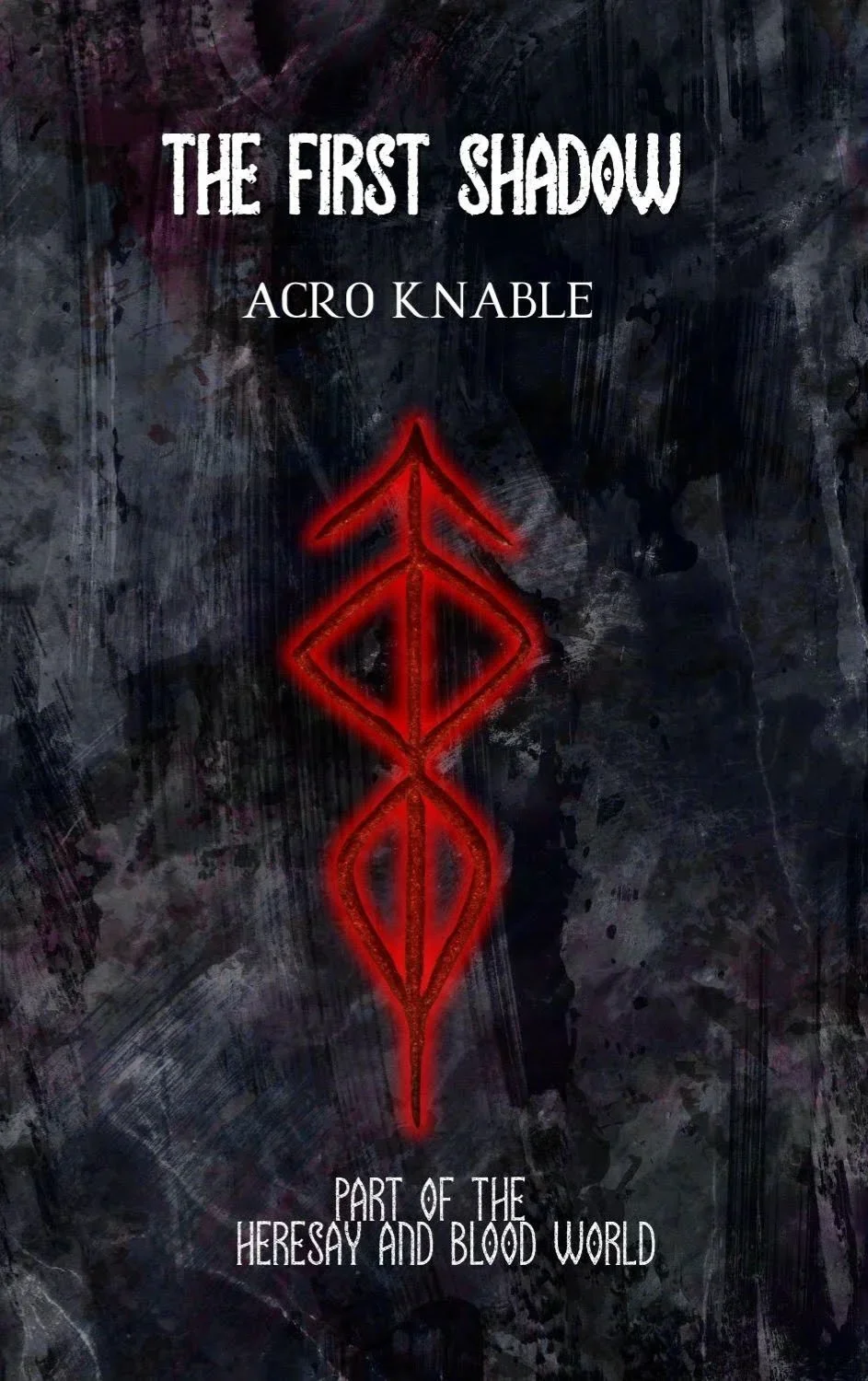
A: I have two published titles: Born of Blood and Ruin and The First Shadow, with two more in editing and three rough-drafted. The Heresy of Blood is a nine-book series with companion novellas, so the pipeline stays full.
My favourite is Genesis of the Cursed, my second novella, releasing in July 2026. Not because it's the most ambitious or the darkest, but because it's the one where I genuinely felt myself grow as a writer.
Every author has a project where something clicks. Where the craft stops feeling like effort and starts feeling like instinct. Genesis of the Cursed was that project for me. I finished it feeling like I'd crossed a threshold.
It's also the origin story of the Curse that shapes everything in the main series, so it holds a special place in the architecture of the whole world.
Q: What inspired the idea for your book?
A: The Heresy of Blood was inspired by something very real: the unspoken class systems we all navigate every day. Who has access to power, who gets erased from history, who the system was designed to protect, and who it was designed to destroy.
Dark fantasy is just the lens I used to tell that story. The vampiric ruling class, the blood hierarchy, the deliberate erasure of half-blood history, those aren't purely fantastical inventions. They're reflections of systems that exist in the real world, dressed in a different costume.
I wanted to write about power and survival and what people are capable of when the world is designed against them. Dark fantasy gave me the freedom to make those systems visible in a way that realistic fiction sometimes can't.
The monsters in The Heresy of Blood are rarely the supernatural ones
Q: How did you come up with the title for your book?
A: The title came from something I think about a lot: how much of a person's life is determined before they're born. We talk about meritocracy and the possibility of reinvention, but the reality is that blood and birthright shape access to power, opportunity, and survival in ways most people aren't comfortable naming directly.
Born of Blood and Ruin asks what happens to the people born on the wrong side of that system. The blood hierarchy in The Dominion isn't subtle; your bloodline determines everything. But it's not as far from our own world as fantasy readers might like to believe.
The Heresy of Blood as a series title came from the same place. In my world, the ruling class built their power on blood, who has it, who controls it, who gets erased because of it. The heresy is simply refusing to accept that system as legitimate.
That refusal feels relevant beyond the fantasy genre.
Q: If you could meet your characters, what would you say to them?
A: I'm sorry.
That's genuinely what I would say. Not to all of them equally, but to each of them for specific reasons.
To Vaelen, I'm sorry for what I took from you before you ever had a chance to choose differently. And I'm sorry it took losing everything for you to find what actually mattered.
To Lira, I'm sorry that surviving was the best I could offer you. You deserved rest, and I kept finding reasons not to give it to you.
To Ashen, I'm sorry the world couldn't hear you until it needed you to save it.
Writers talk about putting characters through difficulty to serve the story. But these characters came from somewhere real. The apology is real, too.
Q: Share something about yourself that your readers don’t know (yet)?
A: Because of my ADHD I've lived several different lives. Acrobatics, martial arts, Highland games, music; I threw myself completely into each one, got good at it, and moved on. That's a pattern a lot of neurodivergent people recognize. The hyperfocus that makes you exceptional at something also makes it hard to stay once the challenge flattens out.
Writing is the first thing that stuck.
I think it's because a world as large as The Heresy of Blood never flattens out. There's always more to excavate, more history to uncover, more stories waiting. Nine books, eleven novellas, and I still haven't reached the edges of it.
For a brain that needs depth, complexity, and constant discovery, a living, breathing world turns out to be the one thing big enough to hold my attention permanently.
Acro Knable is a wonderful addition to the indie author community, and we’re excited to see what they create next.
Check out their Author Page on Indies&Ink to explore more of these authors work and connect with them on social media.
✨ Want to be featured? Apply for an Indie Author Page now through Indies&Ink!